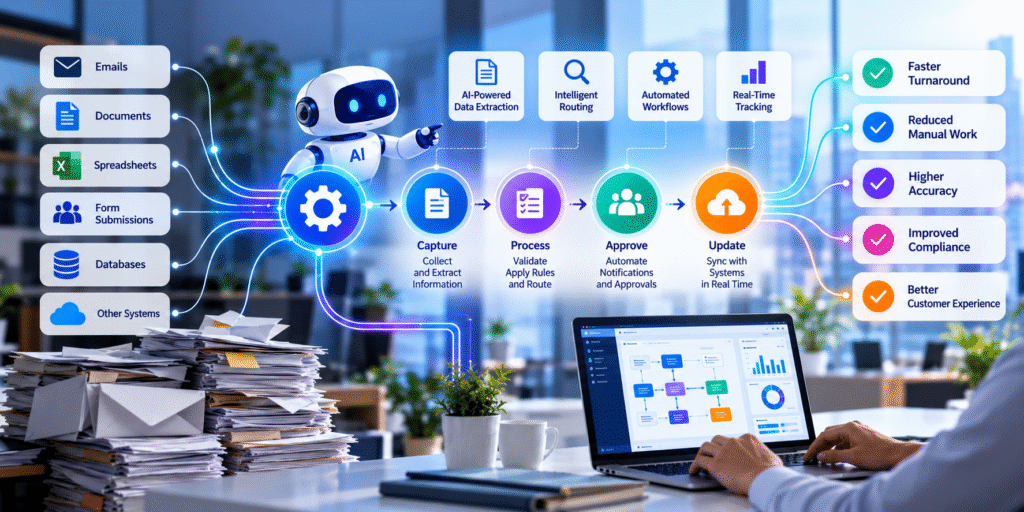
The company had grown steadily, but many of its operational processes were still dependent on spreadsheets, email, and employee knowledge. Management recognized that simply adding more software would not solve the problem.They needed a business application designed around the way they actually operated—and AI integrated where it could produce measurable business value.
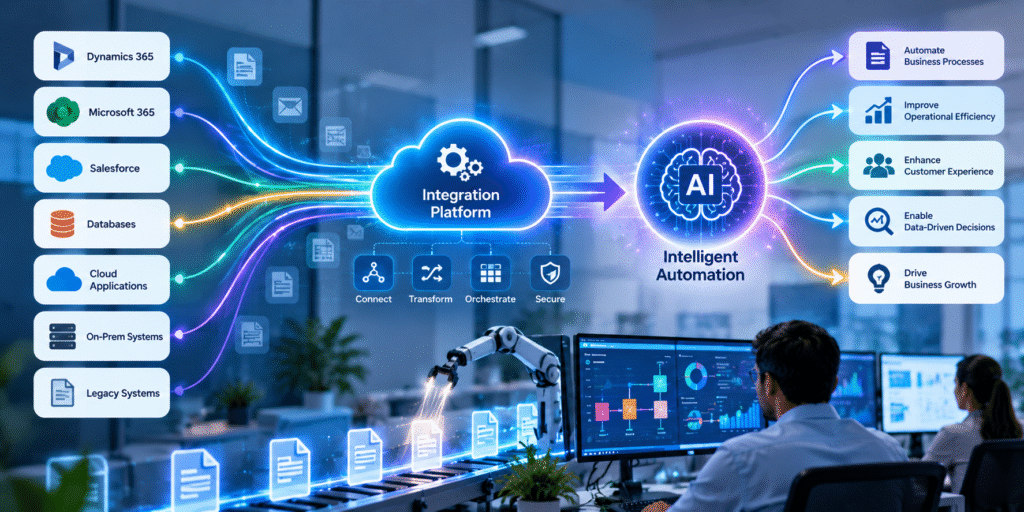
Client had invested in several business applications as it grew. Each system worked well independently—but they weren’t working well together. Customer information lived in the CRM.
Orders were processed through the ERP. E-commerce operated separately. Shipping had its own system. Finance maintained additional information. And employees were filling the gaps.
The company is a startup that have a strong product and a growing customer base. But behind the scenes, many everyday business processes were still being managed through email, spreadsheets, shared folders, and manual follow-ups.
Client company had grown through new employees, additional offices, cloud applications, and increased digital collaboration. Its network infrastructure, however, had evolved through several individual upgrades rather than through a unified architecture.
Our client had grown steadily over several years, adding employees, applications, cloud services, and connected devices. Its infrastructure, however, had evolved incrementally.
What once worked well was now becoming a constraint.
Our client is in Multi site healthcare services industry. They were experiencing rapid growth across 20+ locations, with a workforce of more than 400 employees. As the business expanded, its network infrastructure and operations had not kept pace with the increasing demands of a distributed, hybrid workforce and business-critical healthcare applications.